
No conflict, no story
Tension and pressure exist within and without. We each feel these forces inside, between teammates and groups, and used well we feel it embodied compelling products.
When we understand the difference between tension and pressure, we can recognize it and hold onto it to respond instead of just reacting.
Soon we’re able to put it to work with others in pursuit of excellence.
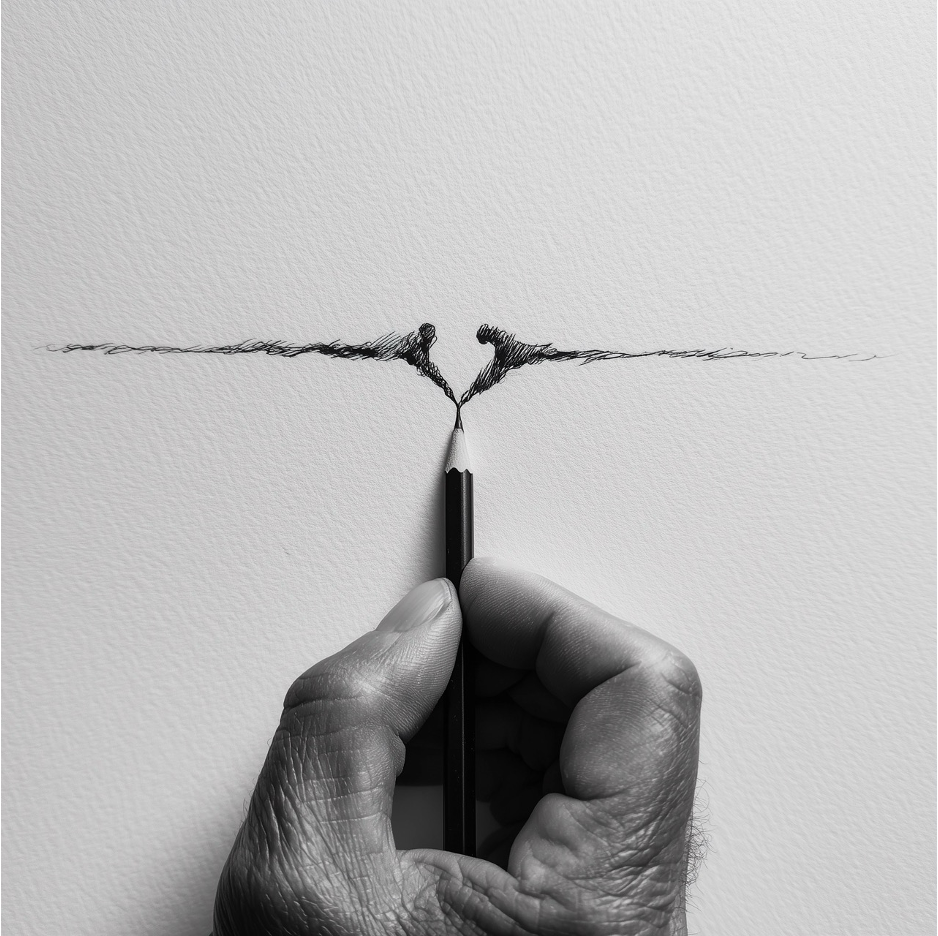
Pull & Push
Action and change come from pressure and tension. Both are so powerful we feel them in our bodies. Tension is a pull that we follow irresistibly, pressure pushes us whether we like it or not.
Tension is about alleviating a pull towards something we crave: attraction, curiosity, wanting.
Pressure is about alleviating a push from something we avoid: quotas, deadlines, and authority.
Notice the pull and the push, who uses which, and when. We respond differently to each one.
Trailblazers pull followers with tension, tyrants only know Pressure, and masterful marketers use both. Tension has a magnetism but can fade without proximity, Pressure can be effective but is capped by the equilibrium point of relief. When we understand both, their masterful modulation shapes performance; over the long-term, tactful tension leads to happiness while pressure eventually crushes.
Steel holds tension, concrete is unrivaled under pressure. Steel-reinforced concrete built modern marvels.
Product tension
Interesting products exude a team’s hard choices. Tug of war between tradeoffs produces a better product faster. Great products have a tension you can feel, if attuned. Sense competing disciplines: engineering / design is the classic. The push and pull between Desirability, Feasibility, Viability: elegance vs makability, luxury vs cost, soft touch paint vs. durability.
No tension? Things end up inelegant, overbuilt, over designed, over-hyped, and ultimately forgettable.
Feel it, hold it, wield it
Many don’t recognize when they are in pulled or pushed, simply reacting on instinct; some of us know what’s happening yet can’t help ourselves. The coolest understand and act independently of it.
Success is proportional to one’s ability to manage these forces: recognizing, resisting, and creating them.
Recognize. Notice the feeling throughout the day. Tune in.
Respond. Don’t react. Hold impulses. Resist for a bit, then a bit more. Here is where we start to build power, by becoming immune to forces others impart upon us. Get in uncomfortable situations, and revel in the pull and push.
Reveal. Learn to create forces in others. Control internally, then externally. More controlled release creates more action. Now, we can let tension rise in Product tradeoffs, modulating so things don’t snap apart but instead resolve elevated in ways that make customers care. Meanwhile, pressure delicately applied helps us deliver the goods on target timing / cost / quality.
No force, no movement
Scarcity, status, attention, ambition. Tension and pressure range in flavors, so learn delicious recipes.
Want hungry customers? Time to sell that roadmap? Gotta get that decision made ASAP? Need to get a team of Engineers and Designers to explore for a while without jumping into solutions?
Sources of forces surround us:
Unanswered questions
The “Got a minute?” Slack with no follow up, or “We need to talk” text message
Limited time offer!
Drawn into that argument that you know you should resist
That thing left unfinis

Originally published on productbriefly.com
Want practice?
Choosing better solutions is a great place to start.
Choose Solutions

“That’s an interesting approach. What other ways did you consider?” the Professor asked the student working through a problem at the blackboard. There were probably ten of us seniors in this Advanced Systems class and the material was difficult, so we were all pretty comfortable flailing in front of each other.
Build tension
Learning to use tension starts inside, then works outwards through team to Product.
Self. Learn to respond and create tension yourself. This works well when you’ve got a peer on the same journey, or a mentor. Share the brief, share stories, build mastery over a month or so.
Team. With a basic proficiency, you’ll inevitably start putting this into practice with the team. It will soon be clear it’s time to elevate their abilities to thrive with tension, and here the brief is useful. When in on the game, they play it to do better work and know to avoid brinksmanship.
Product. To embody Tension in products, take the techniques back to key tradeoffs. Thoughtfully raise the tension, without creating conflict, when dealing with opposing forces - cost vs. customer value, or design elegance vs engineering execution, etc - because it’s how these resolve that elevates your outcomes.
Start today
Too conceptual?
Here’s a list of practical exercises and experiments to get started before the today is over, carrying into tomorrow, with a download link of the pdf for easy team discussion.
Look down at your hands right now. NOW. What are they touching? Is it a smartphone, or a laptop, or some other technology rectangle? Look carefully - where do you think the teams had to make hard tradeoffs - where can you feel them, and the tension they create - draft angles, cost vs. the screen quality, etc?
Check your task list - personal, work, whatever, doesn’t matter. Pick one task that makes you feel pressure to do (you’ve been punting it) and one that makes you feel tension (you can’t wait to jump on it). Why? What commitment, joy, reward, or sense of progress is bound to that task? Why? Where did it come from - or who - and how?
